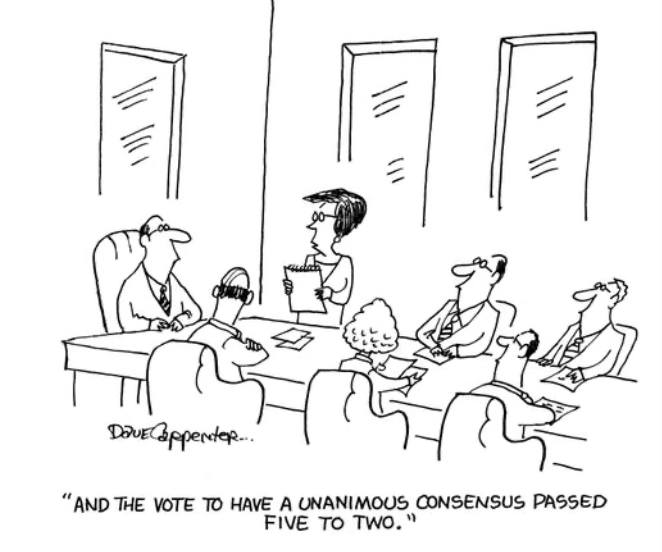
I would like to bring to your attention a trend on both sides of dog training related to the concept of scientific consensus. Consensus in science is often perceived as a straightforward and unproblematic notion, where collective agreement among experts in a particular field is seen as a hallmark of scientific truth. However, this perception is often clouded by the idea of unanimity, in which a single, monolithic view is seen as the only acceptable perspective.
One of the primary challenges in the philosophy of science about consensus is the problem of demarcation, which is closely related to the issue of induction. One of the concerns here is that knowledge is not a neutral or objective entity but rather a product of complex power dynamics and social structures. As a result, scientific knowledge is often shaped by the interests and values of dominant groups, which can profoundly influence the direction of research and the interpretation of results.
Science is diverse and pluralistic. Different researchers bring unique perspectives and approaches to a given problem, advancing scientific knowledge by considering alternative explanations and identifying potential flaws in prevailing theories.
Scientists are susceptible to biases, assumptions, and cultural influences that can influence their perceptions and interpretations of data. The prevailing paradigm of the time can also significantly shape scientific knowledge, influencing how data is collected, interpreted, and presented, resulting in even the most seemingly objective scientific findings being subject to subtle yet significant, subjective influences.
The scientific community is also susceptible to the influence of social and cultural norms. The prevailing paradigms and established authorities within a field can exert considerable influence over research trajectories and the interpretation of findings, sometimes to the extent that they suppress dissenting opinions and alternative viewpoints, resulting in a consensus, not necessarily as a consequence of rigorous, evidence-based evaluation, but rather as a result of a desire to conform to established norms and avoid social exclusion.
The mix of confirmation bias and the imposition of consensus is also used to suppress debate and silence dissenting voices, promoting a specific ideology. For instance, when you use a well-referenced article I wrote, disregarding the references given and asked, the context of the article, and the reality of a country related to supervision, respect for the laws, and cultural complexities, and without even mentioning me, you use it to promote your ideology and opinions, without references to counterargue the points, even if it completely changes the tone and message of my article, it not only shows confirmation bias and a lack of integrity but also what in ethology we call dishonest communication, by deceiving your audience with wrong information and not giving them the link to the original source so they can think by themselves; or when you spend a whole week scrutinizing a paper to discredit it because you disagree with it, but you ignore entirely arguing about a study with a half a million pounds in funding by the government and the critical commentary attached to the paper just because it supports your beliefs.
When we focus solely on specific tools or methodologies, we risk neglecting the issue’s broader complexities and real structural problems. Perhaps this is where agonistic pluralism becomes relevant at this point, promoting the need for a pluralistic and adversarial approach to scientific discussion.
The day trainers step out of their fanatic bubble, start studying ethology and behavior modification from multiple academic sources rather than a filtered book from a friend, and avoid mixing fields or coining new terms for existing concepts, will be the day they can have a more critical and mature discussion. This might mean leaving their comfort zone and potentially clashing with their audience. It is an open door to promote sound education, like the acknowledgment that the use of punishment in its technical sense – decreasing a specific aspect of a behavior – and the use of a degree of aversive stimuli, such as when walking on a lead, clarifying that these technical definitions have no relation to specific tools or violent and coercive practices employed by other trainers. At the same time, they will also show efficient alternatives in practice and various contexts, resulting in specific tools or methods being obsolete as a consequence rather than relying on bans that create division and further polarize their audience – a tactic that seems more a desire for sensationalism and engagement rather than education.
I’ve studied this subject from several sources. I’ll provide references to the books on my virtual shelf below; I encourage you to read them to deepen your understanding of these concepts and avoid misrepresenting them to your audience. I believe we should approach these topics with intellectual honesty and avoid using them to deceive or manipulate others, as this only further erodes trust in the scientific community.
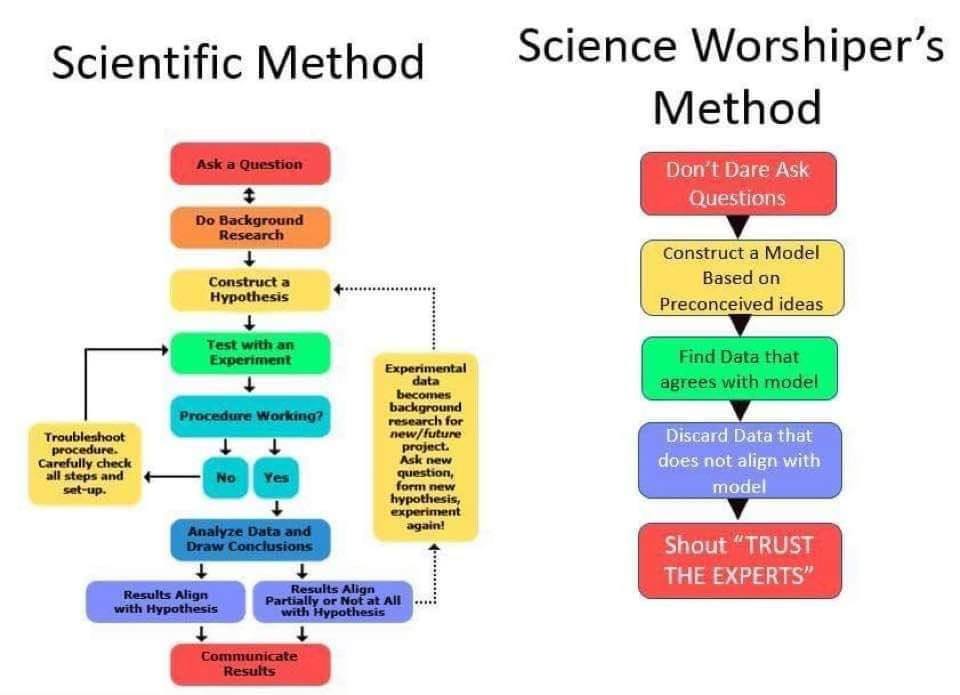
____
References & Suggested Reading
Gauch, H. G. (2003). Scientific method in practice. Cambridge University Press.
Illari, P. M., Russo, F., & Williamson, J. (2011). Causality in the sciences. Oxford University Press.
Kampourakis, K., & Uller, T. (2020). Philosophy of science for biologists. Cambridge University Press.
Leng, G., & Leng, R. I. (2020). The matter of facts: Skepticism, Persuasion, and Evidence in Science. MIT Press.
Nola, R., & Sankey, H. (2007). Theories of scientific method: An Introduction. Routledge.
Schurz, G. (2014). Philosophy of Science: A Unified Approach. Routledge.
Slater, M. H., & Yudell, Z. (2017). Metaphysics and the philosophy of science: New Essays. Oxford University Press.
Comments are not enabled on posts. To discuss an author’s post, you can reply directly to the email you receive if you are subscribed, or contact the author directly by clicking here.