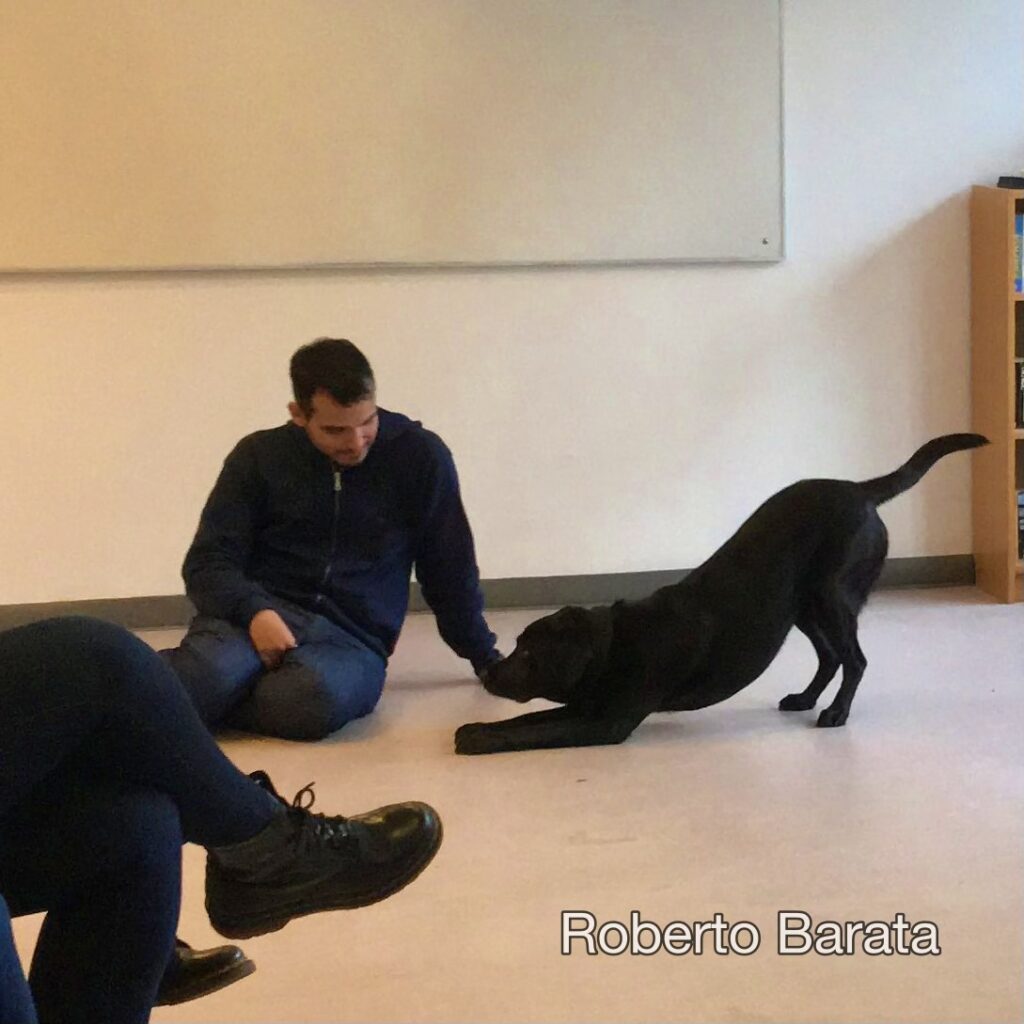
Photo: From a “Teach Without Speech” Workshop in Denmark. Photo by Tilde Detz Jensen.
We all want results—it’s human nature. Whether it’s for Instagram likes, to impress your audience/friends, or merely to feel like we’re doing things “right,” we put pressure on ourselves (and our dogs) to perform. However, the bond between a person and their dog isn’t defined by a perfect report card of tricks or flawless behavior. It goes much deeper. It’s about trust, patience, and understanding each other, even when it’s frustrating. Sure, you can teach a dog to roll over on a signal. But is that really the point? Or is it more about creating moments when they choose to listen, even when they don’t have to?
Social media makes it seem easy. You see these picture-perfect dogs nailing every signal, their owners grinning as if they’ve cracked some secret code. But real life isn’t like that. Real life consists of chewed-up shoes, leash-pulling battles, and the occasional moments of frustration. Dogs aren’t robots. They are not “poor things” either. They’re living, breathing species with their own specificities that often seem to be absent from this equation.
That doesn’t mean training doesn’t matter. Rules are important and life-saving. But control? That’s an illusion in the real world. If your dog suddenly “forgets” how to sit, they’re not being stubborn. Quite the opposite. They’re telling you something. The goal shouldn’t be to force compliance or use treats to make the dog follow you, but to figure out how to work together without bulldozing their instincts.
People argue endlessly about the “right” way to train, but here’s the truth: A good relationship isn’t built on dogmas or agendas. It’s built on respect and continuous learning. Dogs change us just as much as we change them, teaching us patience, humility, and how to love something that doesn’t always make sense to our human brains.
Sometimes, their behavior doesn’t fit into our neat little boxes of “good” or “bad.” And that’s okay. Perhaps it’s a reminder that they’re their own beings, with individual needs and desires that won’t always match ours. Some lessons can’t be found in books or courses; they are experiences you must feel personally.
What are the best moments with a dog? They’re not the ones you can put on a scoreboard or in a propaganda flyer. They’re the quiet, unplanned ones—when the leash goes slack on a walk, or they curl up next to you after a long day. Perfection is a myth. Real connection means learning to live with differences and finding balance in the unscripted reality of sharing a life with another species.
Comments are not enabled on posts. To discuss an author’s post, you can reply directly to the email you receive if you are subscribed, or contact the author directly by clicking here.