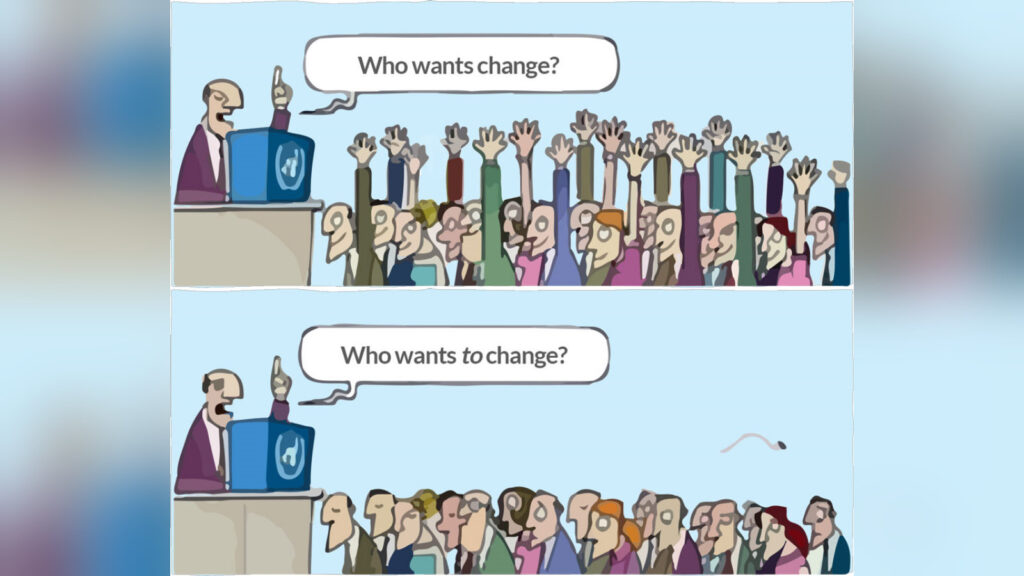
The dog world is definitely not ready for change, and the reason has little to do with change itself. The resistance lives somewhere more personal, in the battle with oneself that any real transformation requires, and most of the noise we hear is that confrontation being thrown outward instead of being faced.
This goes far beyond methods and tools, and honestly, it stopped being about dogs a long time ago. There is a particular moral inversion at work here that rarely gets named directly. The critique of anthropocentrism was necessary, the long-overdue recognition that humans had made themselves the measure and purpose of everything, including the lives of other species. But something has turned inside out, because the individual animal in this discourse has become a cause to be carried rather than a being to be understood, a banner in a war that was always between people. Advocacy flies in the name of the dog while the actual target is someone’s reputation, someone’s livelihood, someone’s place in the conversation. The animal remains at the center of language and vanishes from actual concern, and that is anthropocentrism with a clear conscience, which may be its most resilient form.
What makes all of this possible is the disappearance of context as something worth protecting. Nature is not a right-or-wrong quiz, and any honest study of it reveals a world that operates through trade-offs, pressures, and situational responses that resist the kind of moral sorting we have grown so comfortable with. The relationship between a human and another species is among the most layered, situationally specific things one can study, and none of that layering survives contact with a discourse that has already filled in its answers. People follow the crowd, and the crowd moves fast enough now that pausing to ask a harder question reads as a betrayal of the cause rather than a service to it. There is also a quiet irony here that seems to go unnoticed. If we are really so concerned with other species, so committed to understanding them on their own terms, perhaps the most honest thing we could do is actually learn from them, because most animals are disciplined about one thing we seem to have lost entirely: they avoid unnecessary conflict, and they do not waste energy on fights that serve no survival purpose. They do not hold a grudge, and they do not build a career out of public shaming. They read the situation, they respond to what is real, and they move on, because in nature, the energy spent on conflict that serves no purpose is energy withdrawn from survival, and that debt gets collected with complete indifference to whoever was right. We might consider it.
Compassion and empathy once pointed toward something real, a genuine capacity to sit with another’s experience, human or otherwise, without immediately converting it into a verdict. Those words have been emptied out and refilled with something more useful for tribal purposes, a way of naming the in-group without having to say so directly.
I am sorry for everyone who has faced persistent bullying, mockery, and coordinated pressure built to silence rather than to challenge. I know that the loudest voices do not represent the whole, but they travel the farthest, and they set the terms for what newcomers think this field is. And I find myself sitting with a question I think deserves more than a rhetorical answer. What are you doing to change yourself and your assumptions, and to improve the field professionally? It is much easier to demand change from others than to carry out the quiet, uncomfortable work of examining what you yourself have not revised in years. A field that is fluent at calling others out, following crowds, and largely silent about its own unexamined ground will keep arriving at the same place and keep being surprised to have.
I am still pondering my next decision. Until then, my work continues, held to the same standards it has always been, and the message that still needs to be reached will continue to be carried forward with the same discipline. I believe that is the only approach with any real chance of making this field professional, respected, and worth the trust placed in it.
The image in this post is the one I have kept on my final slide for years. History repeats. Where did we fail?
Comments are not enabled on posts. To discuss an author’s post, you can reply directly to the email you receive if you are subscribed, or contact the author directly by clicking here.